🧠 Fine-tuning
Fine-tuning AI models involves adjusting the parameters of a pre-trained model to perform better on a specific task or dataset. This process allows the model to adapt its learned knowledge to new, related problems, enhancing its accuracy and effectiveness for specialized applications.
20 tools
Fine-Tuning Platforms 7



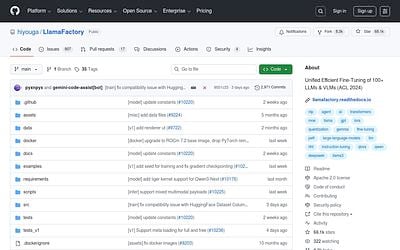

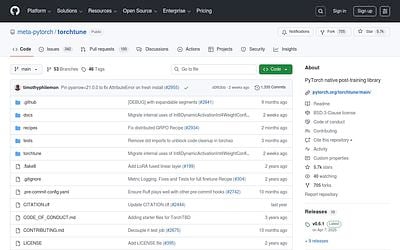
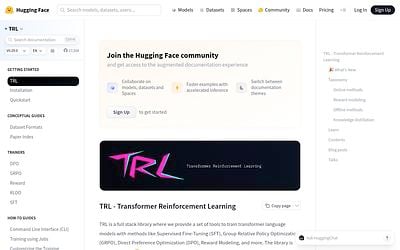
Hugging Face library for training language models with RLHF, SFT, and DPO

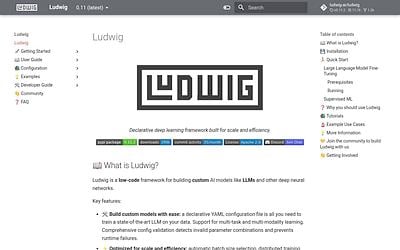
Declarative deep learning framework for building and fine-tuning models with YAML configuration



Hosted Inference APIs 5







Other 8


The open-source AI platform with 500K+ models, inference endpoints, and fine-tuning tools



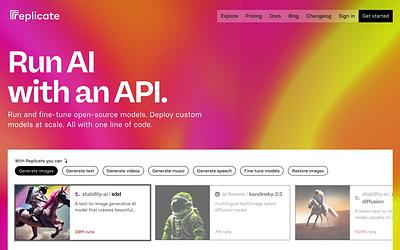
Run and fine-tune open-source models. Deploy custom models at scale. All with one line of code.



Fine-tuning overview
Fine-tuning platforms enable teams to customize pre-trained language models on their own data, creating specialized models that outperform general-purpose ones for specific tasks. These tools handle the end-to-end workflow: dataset preparation, training job management, hyperparameter tuning, evaluation, and deployment.
Modern fine-tuning approaches like LoRA and QLoRA have dramatically reduced the cost and complexity of model customization. What once required multi-GPU clusters can now run on a single GPU in hours. The platforms listed here make these techniques accessible through managed infrastructure and intuitive interfaces.
Fine-tuning is particularly valuable when you need consistent output formatting, domain-specific knowledge, reduced hallucination rates, or lower inference costs by using a smaller, specialized model instead of a large general-purpose one.
Browse other categories
Related stacks
See how fine-tuning tools fit into a full infrastructure stack.
Frequently Asked Questions
When should I fine-tune instead of using prompt engineering?
Fine-tune when prompt engineering hits its limits: when you need consistent output formatting at scale, domain-specific behavior that few-shot examples cannot achieve, lower latency from a smaller model, or cost reduction by replacing a large model with a specialized smaller one. Start with prompting and move to fine-tuning when you have clear training data and measurable quality gaps.
What is LoRA and why does it matter?
LoRA (Low-Rank Adaptation) is a parameter-efficient fine-tuning technique that trains only a small set of additional weights rather than the full model. This reduces GPU memory requirements by 10-100x and training time significantly, making fine-tuning practical for teams without large compute budgets.
How much data do I need to fine-tune a model?
It depends on the task. For format and style changes, 50-100 high-quality examples can be enough. For domain knowledge, you typically need 500-5,000 examples. Quality matters more than quantity. Poorly labeled or inconsistent training data will degrade model performance regardless of dataset size.
Is your product missing?